Thursday, 8 March 2012

Charlemagne & Co.

Week 3: Invasions and Feudalism / Carolingian Culture and Revival - Tutorial Discussion Post

Hi everyone!

Week 3 is all about the Carolingians and the Carolingian Empire! Some historians devote all of their time and energy to studying this period and it is, as we shall learn this week, incredibly important in the shaping of the later Middle Ages in Europe.

Our readings this week consist of a long extract from a secondary source (Medieval Civilization) by Kay Slocum and the full text of a primary source, The Life of Charlemagne, by a fellow called Einhard.


Charlemagne as he appeared in the imagination of the 16th-Century German Painter -  Albrecht Durer
An image of Einhard from a later
medieval manuscript

Einhard is a classic example of the opportunities provided by monasteries for lower status individuals to gain an education and rise in worldly status. Einhard (c.775 - 840) was of a lower status, however, his parents sent him to be educated at a great monastery named Fulda. He became an excellent scholar and part of Charlemagne's administrative team at his court. Later in life Einhard became the personal secretary of Charlemagne's son, Louis the Pious.

When reading Einhard's Life of Charlemagne try to ask yourself the 5 'Ws' of document analysis that we discussed in our last tutorial:

Who was Einhard?
When did he write the Life?
What is it?
Where did he write it?
Why did he write it? (Why do you think he wrote it and why does he say he wrote it?)

Some other questions to ask could be:

What were Einhard's literary influences?
Can we rely on his account?
What portrait of Charlemagne does he create? What values and vision of kingship does he celebrate?

Our other source today, the extract from Kay Slocum's Medieval Civilization, gives us a broad, sweeping history of the Carolingian period and provides us with a lot of context to help us understand Einhard's Life.

Some broad questions to ask when reading this text could be:

How did Charlemagne manage to conquer and control such vast territory?

How would you characterize the relationship between the Church (especially the papacy) and Charlemagne (and his successors) during this period?

What do scholars mean when they refer to the 'Carolingian Renaissance'? What ideals lay behind the renaissance and in what ways did it impact Carolingian culture?

Why is the coronation of Charlemagne in 800 as Holy Roman Empire so important? Does it create a new vision of kingship?

As always your comments can be based on these, or the tutorial discussion questions in our reader, however they do not have to. All of your thoughts, questions, and reflections are welcome!

.........

I know that many of you (including myself!) have been struggling with the geography of Europe in the early medieval period. I've uploaded a map below that I think manages to find a good balance between simplicity and detail. I hope it will help us all get these place names straight!


Map of the Carolingian Empire


......

Just for fun!

Here is a link to another text that Einhard wrote. It's about the translation of the bones of the saints Marcellinus and Peter from their original resting place in Italy across the Alps to the Carolingian Empire. Translation is a fancy word used to describe the movement of relics (bits of saints preserved and venerated as holy objects in the Church). It is a wonderful adventure story full of grave-robbing, hiding from the authorities, and sneaking around! It gives us wonderful insight into early medieval religious culture. Remember from last week the section in our readings on the importance of relics and saints to early medieval people? This story gives us a brilliant snapshot of that part of early medieval culture!

http://www.archive.org/stream/MN5140ucmf_5/MN5140ucmf_5_djvu.txt

And also just for fun.......here is a link to a 12th century poem called The Song of Roland. It celebrates a great battle fought by the forces of Charlemagne during one of his military campaigns. What ideals and values are celebrated in the poem? Do you think they reflect Carolingian culture or 12th century culture?

http://www.fordham.edu/Halsall/basis/roland-ohag.asp

.....

Happy reading everyone!

Diana

Thursday, 1 March 2012

Popes, Priests and Monks......Oh My!


Week 2: Late Antiquity and Christian Culture / Monks and Monarchs: Religious and Political Life in the Early Middle Ages - Tutorial Discussion Post


Hi everyone!

Okay, here we go........our first online tutorial discussion!

Remember that the readings for this week can be found on pages 44-62 of the course reader. If you haven't yet been able to purchase a copy of the reader then do have a look at the unit guide on Blackboard and follow the links therein to an online copy of the Rule of St Benedict. Information on the book, Medieval Worlds: An Introduction to European History, 300-1492, from which another reading for this week is taken, and where to locate it in the library can be found by following the link to the right of this post under 'Weekly Readings'.

I encourage everyone to look over the tutorial discussion questions for this week (on page 43 of the reader) as they will help you reflect on the readings. You may also like to reflect on the information and questions I've included below. Remember though - your comment post does not need to specifically address either the tutorial discussion questions, or my reflections below. They are just here to help you get started.

........

So the readings for this week seem to be all about the Church in the early Middle Ages! I thought that two major themes seem to be represented in the readings:

1) The first theme focuses on the structure, development and influence of the Church in the early Middle Ages.

2) The second theme focuses on the importance of the Rule of St Benedict in the development of monasticism.

A couple of questions that came to my mind when I was doing the readings were:

1) How did the organization of the Church, and the ideals of Christianity, influence early medieval society?

2) Why was the Rule of St Benedict so successful? How did it simultaneously allow a monk to live both 'alone in the wilderness' and in a community?

What did you find interesting (or not!) about the readings? Please post your comments, questions and thoughts!


.......

Just for fun!

Here are a few photos to help spark our imaginations!

The first is a photo of Monte Cassino (the monastery founded by St Benedict) as it appears today. It's amazing to think that this monastic house has been going since the the sixth century!

Monte Cassino
Not all monasteries of course continue to function to this day, however. Below is a photo of the remains of Glastonbury Abbey in the UK, once a very powerful monastery, but now only a quiet ruin.

Glastonbury Abbey, UK

The two images below are shots of cloisters. Cloisters were (and are!) a very important part of monasteries. They were islands of calm and quiet right in the centre of the bustle and activity of a monastery. Their purpose was to provide a place for spiritual reflection and quiet study for the monks. It's interesting to reflect on how cloisters, as havens of calm amidst a busy place, also reflect the desire of every monk - to be alone with God and spiritually content in amongst a community of fellow brothers (or sisters!). Cloisters generally consist of a square covered walkway surrounding a garden or green space.
Cloisters attached to Salisbury Cathedral in the UK


The cloisters at Monte Cassino

Tuesday, 28 February 2012

Bookstore Problems

Hi everyone!

This is just to give everyone a heads up that I've heard the CLAYTON bookstore has run out of Unit Guides for our course but they will be getting more in soon. If you haven't purchased a Unit Guide yet, and were planning to do so from Clayton, just wait a few days and try again.

The CAULFIELD bookstore still has plenty of copies in stock of the Unit Guide (37 when I just rang a moment ago) which should mean - fingers crossed - that all Caulfield students will be able to purchase a copy easily within the first week of classes. If you find the Caulfield bookstore runs out over the next few days just wait a few more as I'm sure they will order more in.

In the meantime, if you are unable to buy a copy of the Unit Guide because the bookstores have run out, and you are worried about getting caught up on the readings, all the material provided in the Unit Guide can be accessed either online or at the library. Please just contact me, or comment here, and I can send you the relevant links or library information.

Happy reading everyone!

Saturday, 25 February 2012

Welcome to Medieval Europe Blog Tutorial Ten!

Welcome everyone!

My name is Diana and I will be your tutor for Medieval Europe (ATS 1316) . I'm really looking forward to exploring medieval history with you all this term.

I'd thought I'd start things off on our blog by just posting a few images to remind us that while studying medieval history can be serious at times it can also be fun.....and even a bit silly!

The first two images are taken from medieval manuscripts depicting medieval university students. Universities, as we know them today, have their origins in the Middle Ages. The first universities were founded in the late twelfth and early thirteenth centuries. Many of the practices associated with the first universities continue in ours today. Everything from the names of our degrees to the robes we wear when we graduate! As you can see from the images student life doesn't seem to have changed too much!


A student enjoying a drink!
Medieval students in lecture


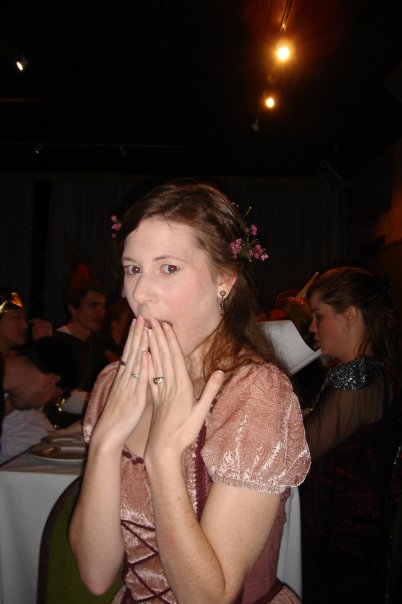
The image below is a photo of myself taken while I was attending a medieval feast hosted by my college at Oxford University a few years back. It's a bit silly but it shows how much fun people still have celebrating the Middle Ages!


St Edmund Hall Medieval Feast 2007

I wish everyone the best this term!